When life is fine, why do you feel stuck?
The business is working. The money is coming in. Nobody is panicking and nothing is on fire. And yet, the important thing you said you wanted to do is still waiting.
That’s the trap of “everything’s fine”. When there’s no crisis pushing you to act, it can feel perfectly reasonable to put the next step off until later. Then later becomes next week, and next week becomes six months.
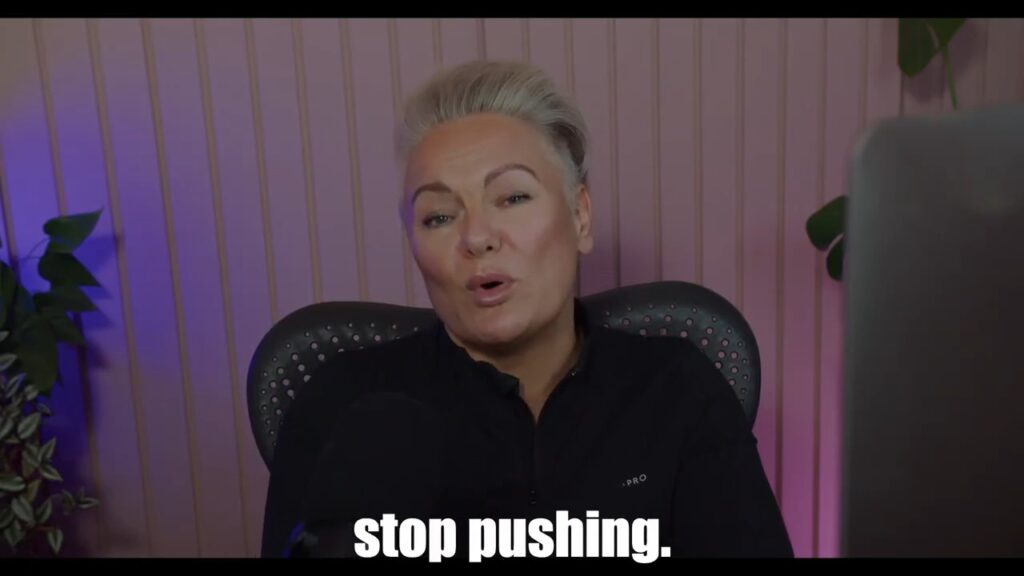
I talk about this pattern in my video. Watch it here:
Watch: Why Successful People Stop Pushing (It's Not Laziness) — Apathetic Alan
You might be busy all week and still avoid the one thing that could make a real difference. You answer old emails, tidy up small problems and deal with tasks that suddenly seem urgent. By Friday, you’re exhausted, but the important thing is untouched.
That isn’t necessarily laziness. Sometimes it’s what happens when you can put something off without an immediate cost.
Meet Apathetic Alan
I give familiar internal patterns names because it can make them easier to notice. The one I call Apathetic Alan tends to show up when life is comfortable enough that you stop feeling any urgency.
Alan isn’t dramatic. He doesn’t shout or panic. He sounds calm and sensible:
- “You’ve done enough.”
- “Why risk what you already have?”
- “You can do it next week.”
- “There’s no need to push.”
Sometimes that voice is right. Maybe you genuinely don’t want the bigger business, the new role or the next milestone. There is nothing wrong with deciding that the life you have is the life you want.
But if you keep saying you want something different while repeatedly putting it off, it’s worth asking whether you’ve chosen contentment, or simply got used to waiting.

Why success can make the next step harder
The milestone becomes normal
A milestone can feel enormous the first time you reach it. Then, after a while, it becomes part of everyday life. You adapt to the new level, and the excitement that once drove you may fade.
Psychologists call this hedonic adaptation: our feelings often adjust as circumstances change. It doesn’t mean progress stops mattering. It means yesterday’s achievement may no longer provide today’s motivation.

So you may find yourself thinking, “I’ve already made it this far. I’m fine.” The question is whether your current situation still matches what you want.
The familiar feels safer
Changing something that works brings uncertainty. Even if you’re interested in a new direction, you may start thinking, “Do I really want to mess with this?”
That hesitation can be useful. Not every opportunity is worth pursuing, and stability can be valuable. But if every possible change becomes a reason to delay, the familiar option can quietly become the default.
Researchers use the term status quo bias to describe the tendency to favour the current situation. In practice, the status quo doesn’t have to be perfect. It only has to feel less uncertain than changing it.
The revealing test: what happens when someone else gets it
Here’s something worth noticing. You can be completely content with your business for a year. Then someone you know announces their first million-pound year, and suddenly you’re very interested. You’ve checked their website, looked at their team on LinkedIn, maybe even checked Companies House.
Five minutes ago, you didn’t care about growth. That reaction usually tells you something: the ambition may still be there, but the urgency has gone. And when urgency goes, you need something else to keep you moving — otherwise you can spend years waiting for life to become uncomfortable enough to make you act.

Busy isn’t the same as making progress
How many times have you reached Friday thinking, “I’ve had such a busy week,” while knowing the one important task is still undone?
Busyness tells you how much you’ve done. It doesn’t tell you whether you’ve moved towards what matters.

A review of 138 studies involving nearly 20,000 participants found that monitoring progress was associated with greater goal attainment. The review found stronger effects when people recorded their progress or reported it publicly. You can read the research on progress monitoring and goal attainment.
That doesn’t mean you need to track every minute of your life. It means you can replace the vague question “Was I busy?” with something more useful:
- What did I say I wanted to move forward?
- What did I actually do towards it?
- What is the next visible step?
Choose a measure that fits the goal. If you want to develop an offer, record the actions you take to build or test it. If you want to make a career change, track applications or conversations, not how many hours you spent thinking about the idea.
Notice the moment just before you don’t act
I’m interested in the small moment just before somebody puts off the thing they intended to do. Often, the thought sounds ordinary:
- “Maybe later.”
- “Now’s probably not the right time.”
- “I don’t need to do it today.”
Because the thought sounds like your own voice, it can pass without question. Naming it (“That’s Apathetic Alan”) gives you a chance to notice it rather than automatically follow it.

Interrupt the thought and choose what comes next
When I use the word delete, I mean it as a clear cue to stop following an unhelpful thought and decide what you want to think instead. It isn’t about pretending the thought never happened or forcing yourself to chase every ambition.
Pause and ask:
Do I actually want this?
If the honest answer is no, that’s useful. You can let go of a goal that no longer fits.
If the answer is yes, ask yourself what you would do next if you weren’t waiting for a crisis to make you act. You probably don’t need another month of planning before you take a small first step. You may need to send the email, make the call, book the time or start the first draft.
The point isn’t to create pressure for the sake of it. It’s to learn how to act while life is comfortable enough to let you avoid acting.

Try a simple progress check
Once a week, take five minutes to write down:
- The thing that matters: What do I want to move forward?
- The evidence: What did I do this week that moved it forward?
- The avoidance thought: What did I tell myself just before I postponed it?
- The next step: What specific action will I take, and when?
Keep the next step small enough to begin. “Grow my business” is too broad to act on today. “Spend 30 minutes outlining the new offer on Tuesday morning” gives you somewhere to start.
And if you decide you don’t want the goal after all, you can stop treating it as a promise you’ve failed to keep. Be honest about what you want, rather than letting indecision make the choice for you.
Don’t wait for everything to go wrong
You don’t have to lose what you’ve built before you’re allowed to want more. You don’t need to make your life uncomfortable just to prove that a goal matters.
Apathetic Alan doesn’t necessarily drag you backwards. He can simply keep you from finding out how far you could have gone.
If you recognise the pattern, watch my video on Apathetic Alan, then take one practical step towards what you genuinely want. You can also learn more about my approach to the DELETE Method™.
Wondering whether you’re taking action, or getting stuck in preparation? Take the Action Faker quiz.